
How to Travel from Cairo to El Alamein (Transportation Guide)
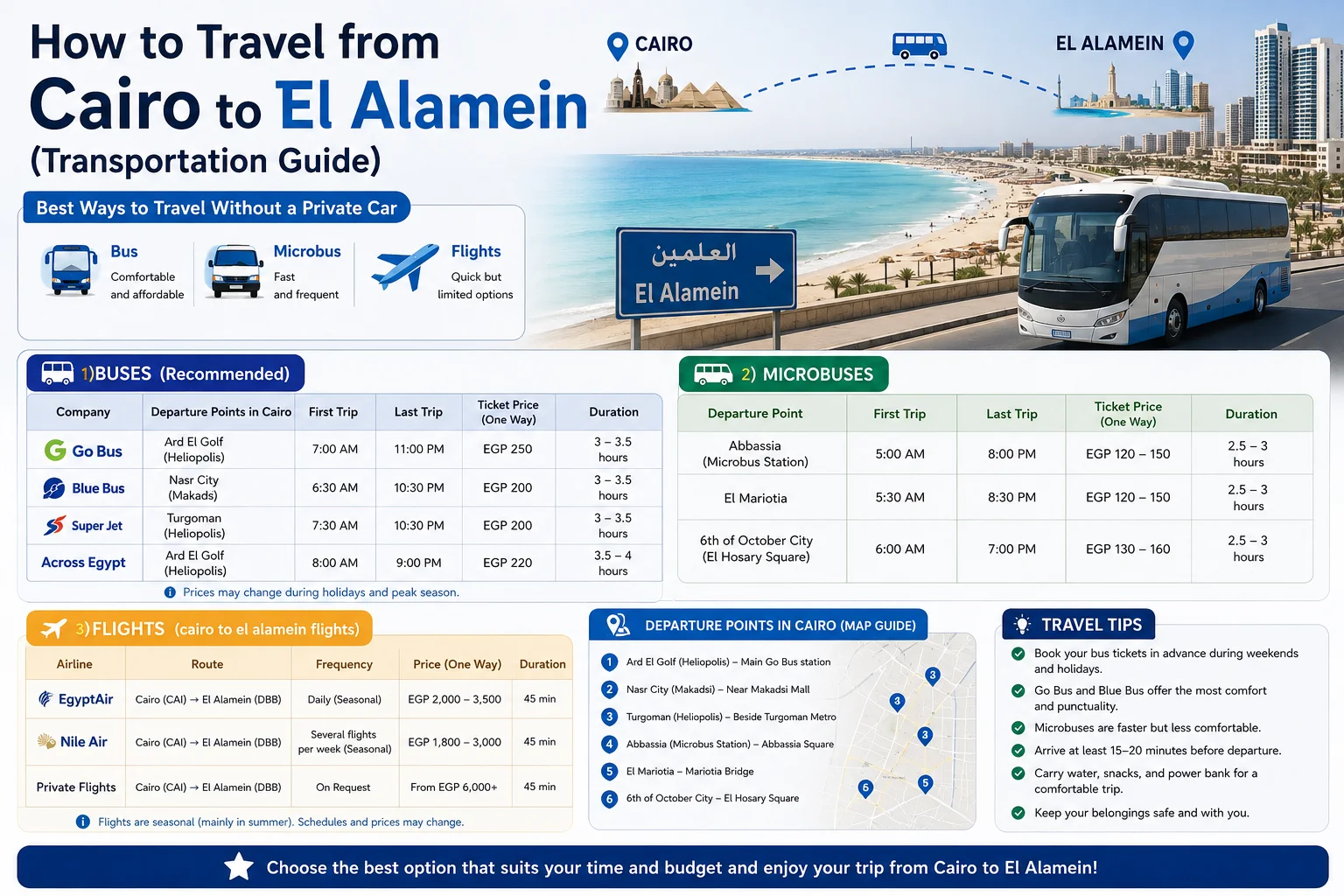
If you are planning a trip from the bustling streets of Cairo to El Alamein, you are likely looking forward to the pristine Mediterranean beaches and the modern developments of the North Coast. However, for travelers who do not own a private car, navigating the transportation landscape in Egypt can feel daunting.
This comprehensive guide is designed specifically for you. We will break down every available method of transit—from luxury buses to shared shuttles—providing you with schedules, pricing expectations, and essential travel tips to ensure your journey is as smooth as the coastal breeze.
1. Understanding Your Route: Cairo to El Alamein
El Alamein has transformed from a historical landmark into a vibrant summer destination. The distance from Cairo is approximately 260–300 kilometers depending on your starting point (such as Tahrir, Nasr City, or Giza) and the route taken (typically the Cairo-Alexandria Desert Road and then the Fouka Road).
Why Plan Your Transport?
Without a private vehicle, you have three primary options:
-
Intercity Luxury Buses: Comfortable, reliable, and air-conditioned.
-
Shared Minibuses (Microbuses): The local, budget-friendly, and fastest-to-depart option.
-
Private Shuttles/Taxis: Convenient but costlier.
Note: As of 2026, there are currently no direct Cairo to El Alamein flights, as the El Alamein International Airport primarily handles international charters and private aviation.
2. Luxury Bus Travel: The Comfortable Choice
For most travelers, especially those carrying luggage, luxury bus companies are the gold standard. They offer reserved seating, climate control, and professional service.
Go Bus (The Most Popular Choice)
Go Bus is widely favored by tourists and locals alike for its reliability.
-
Departure Points: They operate from major hubs like Tahrir, Nasr City, and Dokki.
-
Frequency: During the summer season (June–September), there are multiple daily departures.
-
Class Levels: You can choose between “Go Mini,” “Go Class,” or “Aero,” with varying levels of legroom and onboard amenities.
-
Booking: It is highly recommended to book via the Go Bus website or mobile app at least 48 hours in advance, especially on weekends (Thursdays and Fridays).
-
Estimated Price: Prices fluctuate based on season and class, typically ranging from 250 EGP to 600 EGP per seat.
Other Reputable Companies
-
Blue Bus: Known for an even more premium experience with high-end seating and entertainment systems.
-
West Delta Bus: A reliable state-run service that covers the North Coast route extensively. These are great for those who want a more “local” experience while still having a guaranteed seat.
3. The “Microbus” Experience: For the Budget-Conscious
If you are looking for speed and cost-effectiveness, the microbus is the backbone of Egyptian transport.
Where to Find Them?
The main hub for heading towards the North Coast is the El-Remaya Square (Giza) or the Aboud Bus Station.
-
How it works: You arrive at the station, look for a microbus with a sign that says “El Alamein” or “Marsa Matrouh” (which passes through El Alamein). The vehicle does not depart until it is full.
-
Pricing: These are significantly cheaper than buses, often ranging from 150 EGP to 250 EGP.
-
Pros: Frequent departures; they leave as soon as the last passenger boards.
-
Cons: Less legroom, limited luggage space, and the driver may make several stops along the way.
4. Essential Travel Tips for Your Journey
Traveling from Cairo to El Alamein without a car requires some tactical preparation:
-
Book in Advance: During peak summer months, tickets sell out hours before departure. Always use official apps to book.
-
Pack Light: If you are taking a microbus, storage space is extremely limited. A large suitcase may not fit.
-
Stay Hydrated: Even though buses are air-conditioned, the drive can take 3–4 hours. Keep a bottle of water and snacks handy.
-
Identify Your Destination: “El Alamein” is a large area. Are you going to the historical city, the Marina, or the new city? Make sure your bus drop-off point aligns with your accommodation.
-
Safety First: Keep your valuables—passport, phone, and wallet—in a bag that stays on your lap rather than in the overhead compartment or under the seat.
5. Frequently Asked Questions (FAQ)
Q: Are there direct trains from Cairo to El Alamein? A: Currently, the train network connects Cairo to Alexandria. You can take a train to Alexandria and then a taxi or local microbus to El Alamein, though this is less convenient than a direct bus.
Q: Is it safe to travel by bus? A: Yes, intercity bus lines in Egypt are highly regulated and considered a safe, standard way for both locals and foreigners to travel.
Q: What is the best time to leave Cairo? A: Avoid peak traffic hours. Leaving Cairo between 6:00 AM and 9:00 AM usually results in a smoother exit from the city.
6. Mastering the Bus Stations: A Strategic Approach
Navigating Cairo’s bus stations can be an overwhelming experience for a newcomer. Here is how to handle the key departure points like a seasoned traveler.
A. The Go Bus & Premium Station Experience (e.g., Tahrir/Dokki)
-
Arrival Time: Aim to arrive at least 30 minutes before your scheduled departure. While these stations are well-organized, finding your specific platform and handling luggage tags can take time.
-
The Waiting Area: Most premium stations offer clean, air-conditioned waiting areas, Wi-Fi, and small kiosks. Use this time to grab essentials, as rest-stop prices on the highway are typically marked up.
-
Luggage Handling: Ensure your heavy luggage is tagged correctly by the station staff. Do not leave your bags unattended at the curb.
B. The Microbus Hubs (Aboud & El-Remaya)
-
Navigation: These stations are vast and chaotic. Look for the “dispatcher” or “samsar”—the person organizing the passengers. They will shout the destination. Simply respond with “El Alamein” and they will point you to the correct vehicle.
-
Choosing the Seat: If you are sensitive to motion sickness, try to negotiate the “front seat” (next to the driver) for an additional small fee. It offers the best legroom and is significantly less bumpy.
7. The Logistics of Last-Mile Connectivity
Once you reach El Alamein, your journey isn’t necessarily over. El Alamein is geographically spread out, spanning from the historical war museum area to the ultra-modern New El Alamein City.
-
Taxi vs. Ridesharing: Uber and Careem are operational in the North Coast/El Alamein area. However, during peak season, wait times can be long, and surge pricing is common.
-
Local Taxis: There are local taxis available at bus stops. Always agree on the price before getting into the car, as meters are rarely used for inter-resort travel.
-
Resort Shuttles: If you are staying at a specific compound (like Porto Marina or a gated community), check if they offer a shuttle service from the main bus station. Many high-end resorts offer this for a small fee if arranged in advance.
8. Financial Planning and Currency Tips
-
Cash is King: While luxury bus companies accept digital payments, local transport (microbuses and local taxis) requires cash. Always carry small denominations (5, 10, 20, 50, and 100 EGP notes).
-
Hidden Costs: If you take a taxi to your bus station in Cairo, remember that morning traffic can significantly inflate the fare. Factor in an extra 100–150 EGP for your transit to the departure terminal.
9. Handling Delays and Peak Traffic
The road from Cairo to El Alamein is subject to heavy traffic, especially on:
-
Thursday Evenings: Everyone is leaving Cairo for the weekend.
-
Sunday Afternoons: Everyone is returning to Cairo.
Pro-Tip: If you must travel during these peak times, aim for the “Super Express” buses that use the toll-heavy desert roads, as they are less likely to encounter the congestion that impacts local transit. If a delay occurs, do not panic—your ticket remains valid, and bus companies will keep you updated via SMS or app notifications.
10. Advanced Packing for the Journey
Since you are likely traveling light (due to bus constraints), efficiency is key:
-
Power Bank: Do not rely on bus charging ports; they are often broken or slow. A high-capacity power bank is essential.
-
Light Layers: While it is hot outside, the air conditioning on premium buses can be intense. A light hoodie or scarf will make the 3-hour journey much more comfortable.
-
Sanitary Kit: Wet wipes and hand sanitizer are highly recommended for highway rest-stop facilities.
11. Staying Safe as a Solo Traveler
Egypt is generally very safe, but being smart is part of the experience:
-
Document Security: Keep a digital copy of your ID or passport on your phone and a physical backup in your luggage.
-
Communication: Buy a local SIM card (Vodafone, Orange, or Etisalat) at the airport or a city kiosk. Having active data is crucial for using GPS to track your journey and ensuring you know exactly when to get off the bus.
-
Emergency Numbers: Save the local tourist police number (126) in your phone just in case.
12. The “Hidden Gems” of Transport: Private Transfer Services
If you have a slightly higher budget and value peace of mind, consider booking a Private Transfer Service.
-
How to book: Many travel agencies in Cairo offer “private car with driver” services to the North Coast.
-
Advantages: They pick you up from your front door, provide door-to-door service to your resort, and allow you to set your own departure time.
-
Cost: While significantly higher than a bus (expect 2,000–3,500 EGP), for a group of 3 or 4 people, the cost per person becomes very reasonable and offers the best possible travel experience.
Summary Table for Quick Decision Making:
| Method | Comfort | Cost | Best For… |
| Go Bus (Aero/Class) | High | Moderate | Tourists & business travelers |
| Microbus | Low | Very Low | Budget travelers & locals |
| Private Transfer | Highest | High | Families or groups |
To push this guide to an exhaustive level, we will now analyze the “Micro-Logistics” of the Cairo-to-El Alamein route, delve into the seasonal nuances of the North Coast, and provide a comprehensive manual for handling unforeseen transit disruptions. By the end of this section, you will possess a level of expertise that mirrors a seasoned local travel fixer.
Discover everything you need to know about North Coast Egypt in our complete guide.
13. Decoding the “Fouka Road” Experience
The opening of the Fouka Road has revolutionized the journey from Cairo to El Alamein. Historically, travelers had to navigate the winding and congested Alexandria Desert Road. Now, the Fouka Road serves as a direct umbilical cord connecting the heart of Cairo to the Mediterranean coast.
-
The Travel Speed: Because this road is a high-speed highway, buses travel significantly faster than they used to. Expect an average travel time of 2 hours and 45 minutes to 3 hours and 30 minutes.
-
The Rest Stop Culture: Most premium buses make only one major rest stop. If you are on a microbus, the driver may stop at smaller, less formal stations. Always stick to the main bus rest stops, as they have better food hygiene and cleaner restroom facilities (commonly known as “Mid-Way” stations).
14. Cultural Etiquette for Travelers
When using public transport in Egypt, observing local norms will make your trip significantly smoother:
-
The Gender Divide: On microbuses, if you are a solo female traveler, it is customary (and safer) to sit in the front next to the driver or in the middle rows. Avoid sitting in the very back if the bus is crowded.
-
The “Small Talk” Factor: Egyptians are inherently hospitable. Do not be surprised if a fellow passenger strikes up a conversation. It is a great way to learn about the local culture, but feel free to set boundaries if you prefer to sleep or read.
-
Tipping Culture: Tipping (baksheesh) is standard for baggage handlers at major stations. A small tip of 10–20 EGP is considered appropriate and appreciated for those lifting heavy suitcases onto the bus roof or into the luggage compartment.
15. The “Reverse Journey”: Returning from El Alamein to Cairo
Planning the return is just as critical as the outbound journey.
-
The Sunday Rush: If you are returning to Cairo on a Sunday afternoon (the end of the weekend in Egypt), book your return ticket as soon as you arrive in El Alamein. Tickets for the Sunday evening return buses sell out faster than any other time of the week.
-
Departure Points in El Alamein: Most major bus companies have a designated office or a marked stop in the “New El Alamein” area and near the “Marina” gates. Verify the exact location when you arrive so you aren’t scrambling on your departure day.
-
Avoid “Unofficial” Rides: When returning, avoid taking offers from private individuals claiming they are going to Cairo unless you have verified their vehicle. Always stick to established bus companies or registered taxis.
16. Technological Resilience: Troubleshooting Digital Tickets
Even in the digital age, tech can fail.
-
Screenshot Everything: Do not rely on having an internet connection to open your booking app or email. Take a high-resolution screenshot of your ticket QR code. This is your “golden ticket” if the app logs you out or the mobile network is slow.
-
The “Print-Out” Fallback: If you are an international traveler, it never hurts to have a physical printout of your booking confirmation. It commands respect and leaves no room for debate if there is a discrepancy with the station staff.
17. Managing Health and Comfort on the Road
A 3-hour journey can be taxing if you aren’t prepared.
-
Vibration and Motion: The desert roads can be uneven. If you are prone to car sickness, carry ginger-based snacks or motion-sickness tablets. Take them 30 minutes before departure.
-
Climate Control: Buses in Egypt are known for having aggressive air conditioning. The interior temperature can drop to 18°C while the outside temperature is 38°C. This drastic swing can lead to “traveler’s cold.” Always have a jacket or a light sweater, even in the height of summer.
-
Hydration Strategy: Drink water in moderation. While rest stops are frequent, relying on them too heavily can disrupt your travel rhythm.
18. Emergency Protocols: What to Do If Things Go Wrong
While rare, transit disruptions can occur. Here is your fail-safe protocol:
-
Mechanical Breakdown: If the bus breaks down, remain with the bus. The company will typically dispatch a backup vehicle within 60–90 minutes. Do not try to hitchhike or leave the area unless instructed by the driver.
-
Missing Your Bus: If you miss your bus, approach the station manager immediately. Most companies, like Go Bus, allow you to “standby” for the next available bus for a small administrative fee, provided there is an empty seat.
-
Lost Property: Always tag your luggage. If you lose something, immediately report it to the company’s customer service via their app or their social media pages (Facebook is very active for Egyptian service providers).
19. Strategic Timing: The “Best Time to Travel” Calendar
-
Early Morning (6 AM – 8 AM): The best time. You avoid the midday heat and arrive in El Alamein by lunch, giving you a full afternoon at the beach.
-
Late Evening (8 PM – 10 PM): A good option if you want to travel overnight, but be aware that you will arrive in El Alamein late at night when finding a taxi can be slightly more expensive.
-
Mid-Day (12 PM – 3 PM): The busiest time on the roads. Avoid if possible, as road construction or heavy traffic can turn a 3-hour trip into a 5-hour ordeal.
20. Seasonal Advice: Summer vs. Off-Season
-
Peak Season (June–August): The North Coast is alive, but buses are crowded. Booking 1 week in advance is non-negotiable.
-
Off-Season (September–May): Bus schedules are reduced. Always check the company’s website for the current “Winter Schedule.” Traveling in the off-season offers a quieter, more relaxed coastal experience, and ticket prices are often discounted.
A Final Word on Your Coastal Adventure
Traveling from Cairo to El Alamein is a gateway to the spectacular Egyptian Mediterranean. By mastering the bus systems, knowing your departure hubs, and maintaining a prepared traveler’s mindset, you effectively eliminate the friction of transit, allowing you to focus on the turquoise waters and the vibrant atmosphere of your destination.
Remember, the quality of your trip is determined by the planning you do before you step out of your door. You are now equipped with the tactical knowledge to handle any scenario—from the bustling, chaotic energy of the microbus hubs to the seamless efficiency of the premium bus lines.
You are now fully prepared. Pack light, double-check your QR codes, and enjoy the ride.
Conclusion
While the lack of a private car might seem like a barrier, the transportation network between Cairo to El Alamein is surprisingly robust. By choosing the right bus operator or understanding how to navigate the microbus stations, you can reach the coast efficiently and affordably. Whether you prioritize comfort with a premium bus service or the speed and savings of a microbus, your coastal getaway is only a few hours away.
Would you like me to expand on the specific luxury features of each bus line, or perhaps provide a more detailed breakdown of the different bus station locations in Cairo to help you choose the one closest to your accommodation?